Blog Summary–
India’s senior living sector is entering a transformative phase, driven by an ageing population, evolving lifestyles, and increasing demand for independent, wellness-focused communities. According to the JLL-ASLI report, the market is expected to grow by more than 300% by 2030, making retirement homes and senior living communities one of the fastest-growing segments in Indian real estate. This blog explores the trends, opportunities, and reasons why senior living is becoming the preferred choice for modern retirees.
Senior Living in India: Why Retirement Homes Are Shaping the Future of Ageing
India is witnessing one of the most significant demographic transformations in its history. With increasing life expectancy, changing family structures, and growing financial independence among retirees, senior living in India has evolved from being a niche concept to one of the fastest-growing sectors in the country’s real estate and healthcare ecosystem.
Unlike previous generations, today’s seniors are healthier, more active, and aspire to live independently while enjoying comfort, security, wellness, and a vibrant social life. As a result, the demand for professionally managed retirement homes and senior living communities is accelerating at an unprecedented pace.
Recent research by JLL and the Association of Senior Living India (ASLI) highlights that India’s senior living market is expected to grow by more than 300% by 2030, reaching an estimated value of USD 7.7 billion (approximately INR 64,500 crore). This remarkable growth reflects not just a real estate trend but a fundamental shift in how India is redefining retirement and ageing.
India’s Al.geing Population Is Creating New Opportunities
India is already home to the world’s second-largest elderly population. According to the JLL-ASLI report, the number of people aged 60 years and above is projected to increase from 156.7 million in 2024 to 346 million by 2050.
This demographic shift brings both challenges and opportunities. Traditional joint family structures are evolving, urbanisation is increasing, and many children now live in different cities or overseas. As a result, many seniors seek communities where they can maintain their independence while having access to healthcare, security, and meaningful social engagement.
Senior living communities are emerging as the ideal solution by offering an environment specifically designed for the needs and aspirations of older adults.
Why Senior Living in India Is Growing Rapidly
Several factors are driving the rapid expansion of senior living in India.
Changing Lifestyle Preferences
Modern retirees no longer view retirement as a period of dependency. Instead, they seek an active, fulfilling lifestyle with opportunities to pursue hobbies, wellness activities, travel, and social interactions.
Growing Financial Independence
Today’s retirees are financially stronger than previous generations, thanks to pensions, investments, and accumulated wealth. Many are willing to invest in a quality lifestyle that offers convenience, healthcare, and peace of mind.
Smaller Families and Urban Migration
With nuclear families becoming the norm and younger generations relocating for education and career opportunities, many seniors prefer living in professionally managed communities where support is always available.
Longer Life Expectancy
As healthcare improves, people are living longer. This increases the need for housing solutions that can adapt to changing healthcare requirements while promoting independent living.
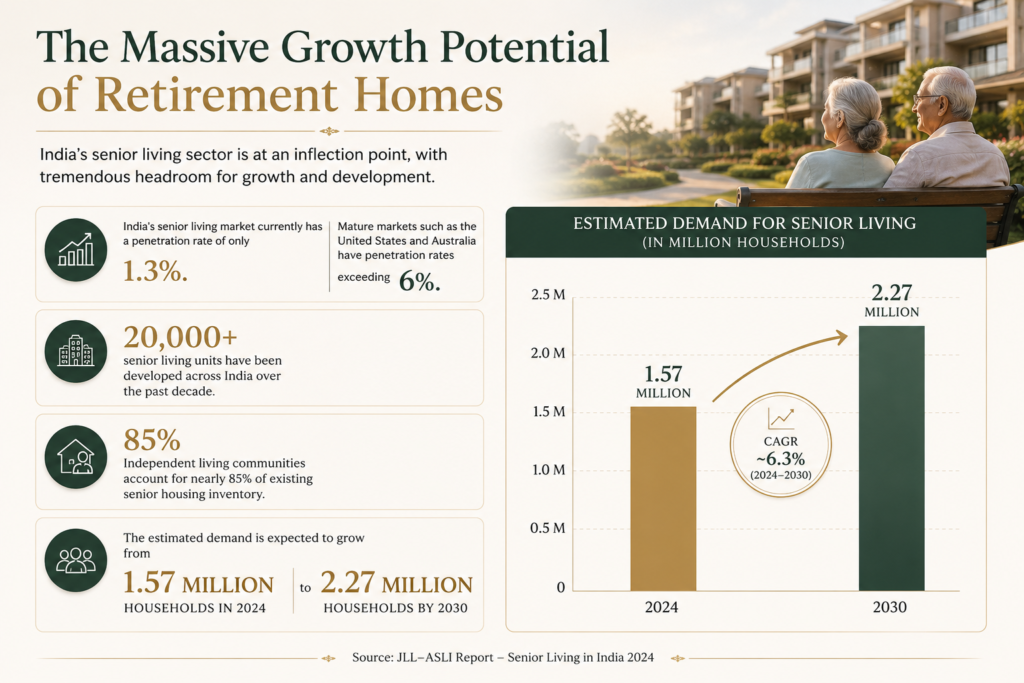
The Massive Growth Potential of Retirement Homes
Despite India’s enormous elderly population, the organised senior living sector remains significantly underdeveloped.
According to the JLL-ASLI report:
- India’s senior living market currently has a penetration rate of only 1.3%.
- Mature markets such as the United States and Australia have penetration rates exceeding 6%.
- More than 20,000 senior living units have been developed across India over the past decade.
- Independent living communities account for nearly 85% of existing senior housing inventory.
- The estimated demand is expected to grow from 1.57 million households in 2024 to 2.27 million households by 2030.
Even if supply doubles over the next few years, demand is expected to outpace available inventory, making senior living one of India’s most promising real estate segments.
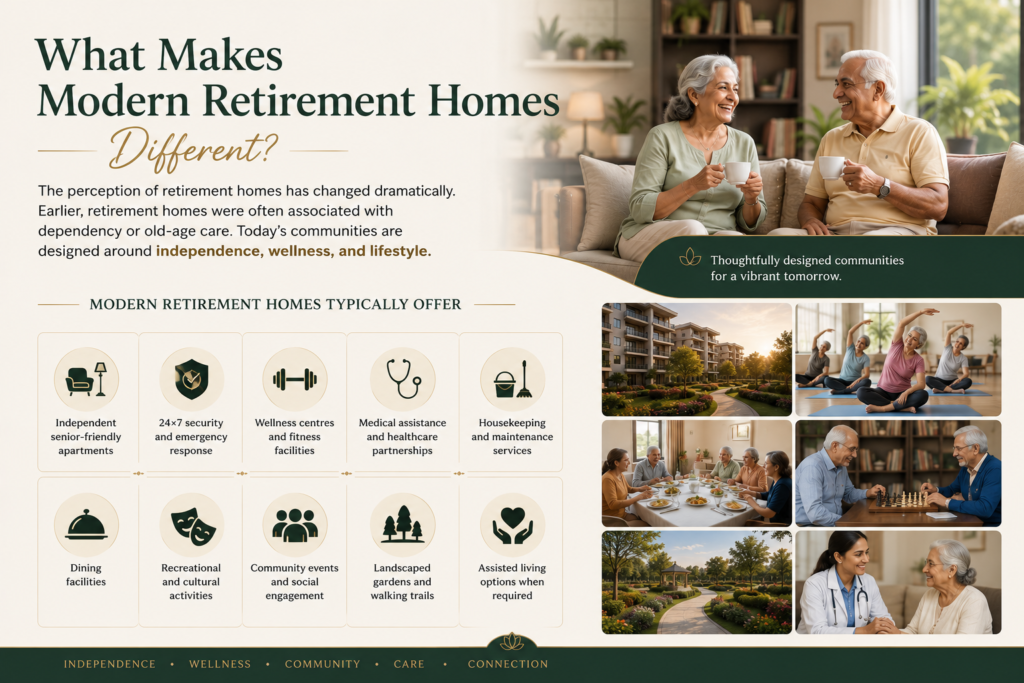
What Makes Modern Retirement Homes Different?
The perception of retirement homes has changed dramatically.
Earlier, retirement homes were often associated with dependency or old-age care. Today’s communities are designed around independence, wellness, and lifestyle.
Modern retirement homes typically offer:
- Independent senior-friendly apartments
- 24×7 security and emergency response
- Wellness centres and fitness facilities
- Medical assistance and healthcare partnerships
- Housekeeping and maintenance services
- Dining facilities
- Recreational and cultural activities
- Community events and social engagement
- Landscaped gardens and walking trails
- Assisted living options when required
Many communities also provide a continuum of care, allowing residents to transition seamlessly from independent living to assisted care if their health needs change.
Southern India Leads the Senior Living Revolution
Southern India currently accounts for approximately 60% of India’s senior living market.
States such as Karnataka, Tamil Nadu, Kerala, and Telangana have witnessed faster adoption due to:
- Higher urbanisation
- Better healthcare infrastructure
- Greater awareness of senior living
- Larger NRI populations whose parents reside in India
- Earlier demographic ageing compared to other regions
However, cities like Gurgaon, Noida, Pune, Mumbai, and Hyderabad are rapidly emerging as important senior living destinations as awareness continues to grow.
Senior Living as an Investment Opportunity
The growth of senior living in India presents significant opportunities for developers, investors, and real estate professionals.
According to JLL, institutional investments in India’s senior living sector have already exceeded USD 40 million over the past two years. With demand expected to surge and supply still limited, the sector offers attractive long-term investment potential.
As awareness increases and regulatory frameworks evolve, senior housing is expected to become a mainstream asset class within Indian real estate.
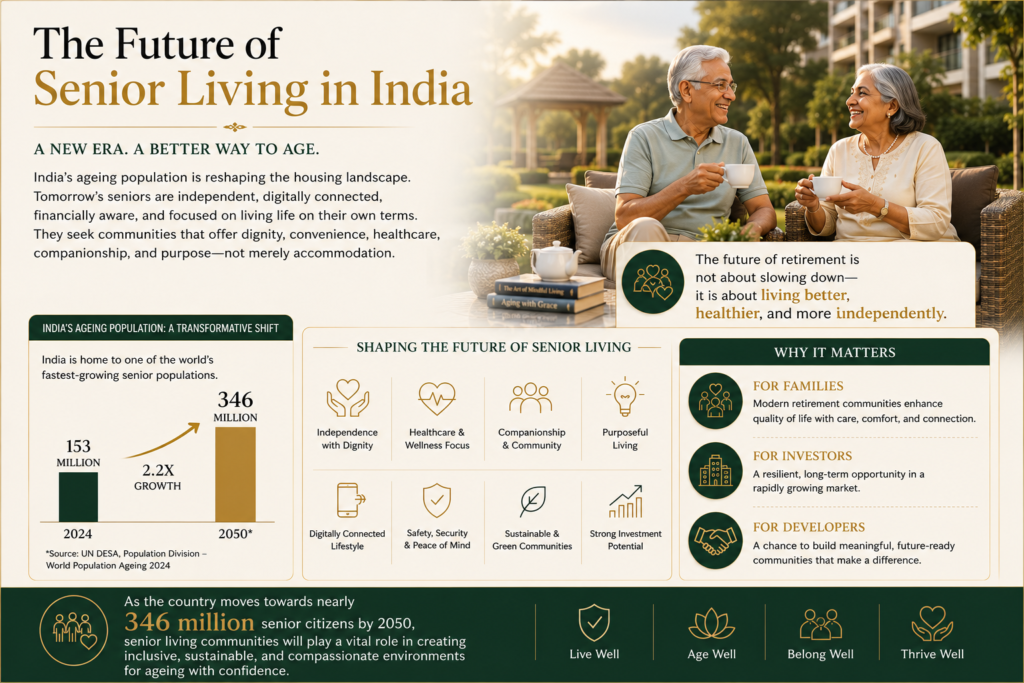
The Future of Senior Living in India
India’s ageing population is reshaping the housing landscape.
Tomorrow’s seniors are independent, digitally connected, financially aware, and focused on living life on their own terms. They are looking for communities that offer dignity, convenience, healthcare, companionship, and purpose—not merely accommodation.
As the country moves towards nearly 346 million senior citizens by 2050, senior living communities will play a vital role in creating inclusive, sustainable, and compassionate environments for ageing with confidence.
For families, choosing a modern retirement community is no longer simply about care—it is about enhancing quality of life. For investors and developers, it represents one of the most exciting long-term opportunities in Indian real estate.
The future of retirement is not about slowing down—it is about living better, healthier, and more independently.
Conclusion
The remarkable rise of senior living in India signals a new chapter in the country’s real estate evolution. With growing awareness, favourable demographics, and increasing demand for professionally managed retirement homes, the sector is poised for exceptional growth over the coming decade.
At Luxora Realty, we believe senior living is about creating communities where comfort, independence, healthcare, and meaningful living come together. Whether you are planning your own retirement, helping your parents explore the right options, or evaluating investment opportunities, understanding this evolving sector is the first step towards making informed decisions.
Every family’s needs are unique. Schedule a personalised consultation with our senior living specialists to explore retirement communities, compare projects, understand pricing, and receive unbiased guidance tailored to your lifestyle and future goals.
Book Your Personal Consultation https://luxorarealty.in/contact/
Frequently Asked Questions (FAQs)
1. What is senior living in India?
Senior living refers to professionally managed residential communities designed for individuals aged 55 or 60 and above, offering independent living, healthcare support, security, and lifestyle amenities.
2. How are retirement homes different from old-age homes?
Modern retirement homes focus on independent and active living, whereas traditional old-age homes generally provide basic accommodation and care for seniors who require greater support.
3. Why is senior living growing rapidly in India?
Growth is being driven by an ageing population, changing family structures, increasing life expectancy, higher financial independence among retirees, and greater awareness of wellness-focused retirement communities.
4. Are retirement homes a good investment?
Yes. With demand expected to significantly exceed supply over the coming years, senior living is emerging as a promising long-term real estate investment segment in India.
5. What amenities do senior living communities offer?
Most communities provide senior-friendly residences, healthcare support, wellness centres, housekeeping, security, dining services, recreational facilities, and organised social activities.
6. Who should consider senior living communities? Senior living communities are ideal for retirees seeking an independent, secure, and socially engaging lifestyle with access to healthcare and support services when needed

Founder, Luxora Realty | Luxury Real Estate Strategist | 18+ Years of Experience
With over 18 years of expertise in India’s luxury real estate sector, Deepika has advised HNIs, NRIs, entrepreneurs, and senior executives on premium residential investments across Gurgaon, Noida, and Delhi NCR. As the Founder of Luxora Realty, she combines market intelligence with a client-first approach to deliver trusted insights on luxury homes, senior living communities, and high-value real estate investments.
This version reads more like an executive profile & strengthens your EEAT (Experience, Expertise, Authoritativeness, and Trustworthiness) signals, making it ideal for blog author pages and helping establish both Deepika and Luxora Realty as authoritative voices in luxury real estate.
